Featured
The A Lot Of Harmful Mistakes in Financial Obligation Con...
Identifying Traps in High-Interest Subprime Loan Uses
The Advantages and disadvantages of Variable Combination ...

Practical Steps for Effective Interest Rate Negotiation
The A Lot Of Harmful Mistakes in Financial Obligation Consolidation
Table of Contents
Psychological Barriers to Minimizing Interest in San Antonio Debt Consolidation Without Loans Or Bankruptcy
Customer behavior in 2026 remains greatly influenced by the psychological weight of month-to-month obligations. While the mathematical expense of high-interest financial obligation is clear, the psychological roadblocks avoiding reliable repayment are often less visible. The majority of homeowners in San Antonio Debt Consolidation Without Loans Or Bankruptcy face a common cognitive hurdle: the propensity to focus on the instant regular monthly payment instead of the long-term accumulation of interest. This "anchoring predisposition" occurs when a customer takes a look at the minimum payment needed by a credit card company and unconsciously treats that figure as a safe or proper amount to pay. In reality, paying only the minimum permits interest to compound, frequently leading to customers repaying double or triple what they originally borrowed.
Breaking this cycle needs a shift in how financial obligation is viewed. Rather of viewing a credit card balance as a single swelling sum, it is more reliable to see interest as a daily cost for "leasing" cash. When people in regional markets start calculating the hourly cost of their debt, the inspiration to decrease primary balances heightens. Behavioral economists have actually kept in mind that seeing a tangible breakdown of interest expenses can set off a loss-aversion reaction, which is a much more powerful motivator than the promise of future cost savings. This psychological shift is important for anyone intending to stay debt-free throughout 2026.
Need for Bankruptcy Alternatives has increased as more individuals acknowledge the requirement for professional guidance in restructuring their liabilities. Getting an outdoors point of view helps remove the emotional shame often related to high balances, enabling a more medical, logic-based approach to interest reduction.
The Cognitive Effect of Rate Of Interest in various regions
High-interest debt does not just drain checking account-- it produces a continuous state of low-level cognitive load. This psychological strain makes it harder to make smart financial choices, developing a self-reinforcing loop of bad choices. Throughout the nation, consumers are finding that the stress of carrying balances results in "decision fatigue," where the brain just quits on intricate budgeting and defaults to the simplest, most costly habits. To combat this in 2026, lots of are turning to structured financial obligation management programs that streamline the payment procedure.

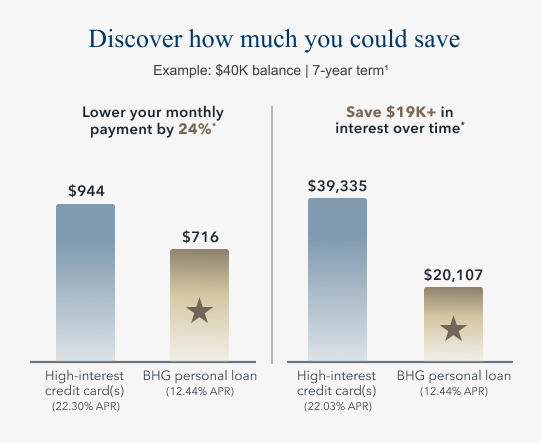
Nonprofit credit counseling agencies, such as those authorized by the U.S. Department of Justice, supply a required bridge in between overwhelming debt and monetary clarity. These 501(c)(3) organizations offer debt management programs that combine multiple regular monthly payments into one. They negotiate straight with creditors to lower interest rates. For a customer in the surrounding area, minimizing a rates of interest from 24% to 8% is not just a math win-- it is a psychological relief. When more of every dollar goes towards the principal, the balance drops much faster, providing the favorable reinforcement required to stay with a budget plan.
Effective Bankruptcy Alternatives stays a common service for families that require to stop the bleeding of compound interest. By removing the intricacy of managing a number of various due dates and fluctuating interest charges, these programs allow the brain to focus on earning and saving rather than just making it through the next billing cycle.
Behavioral Methods for Financial Obligation Avoidance in 2026
Remaining debt-free throughout the remainder of 2026 involves more than just settling old balances. It needs a fundamental change in costs triggers. One reliable technique is the "24-hour rule" for any non-essential purchase. By requiring a cooling-off duration, the preliminary dopamine hit of a possible purchase fades, enabling the prefrontal cortex to take over and evaluate the real need of the item. In San Antonio Debt Consolidation Without Loans Or Bankruptcy, where digital marketing is continuous, this mental barrier is an essential defense mechanism.
Another psychological tactic involves "gamifying" the interest-saving procedure. Some discover success by tracking precisely how much interest they avoided monthly by making extra payments. Seeing a "conserved" amount grow can be just as pleasing as seeing a bank balance increase. This turns the story from one of deprivation to among acquisition-- you are obtaining your own future income by not offering it to a lending institution. Access to Bankruptcy Alternatives in Texas supplies the instructional foundation for these practices, guaranteeing that the progress made during 2026 is irreversible instead of short-lived.
The Connection In Between Real Estate Stability and Customer Financial Obligation
Real estate remains the largest cost for a lot of households in the United States. The relationship in between a home loan and high-interest consumer debt is mutual. When charge card interest takes in too much of a family's earnings, the risk of real estate instability increases. On the other hand, those who have their housing expenses under control find it much simpler to take on revolving financial obligation. HUD-approved housing counseling is a resource often neglected by those focusing only on charge card, however it supplies an in-depth appearance at how a home fits into a broader financial photo.
For locals in your specific area, looking for counseling that addresses both housing and customer financial obligation makes sure no part of the financial image is neglected. Expert counselors can help focus on which financial obligations to pay very first based on rates of interest and legal protections. This unbiased prioritization is often impossible for somebody in the middle of a monetary crisis to do on their own, as the loudest creditors-- often those with the greatest rates of interest-- tend to get the most attention no matter the long-lasting impact.
The role of nonprofit credit counseling is to function as a neutral 3rd party. Due to the fact that these agencies operate as 501(c)(3) entities, their goal is education and rehab instead of earnings. They provide complimentary credit counseling and pre-bankruptcy education, which are essential tools for those who feel they have reached a dead end. In 2026, the accessibility of these services across all 50 states indicates that geographic area is no longer a barrier to getting high-quality monetary suggestions.
As 2026 progresses, the difference between those who deal with financial obligation and those who remain debt-free typically comes down to the systems they put in location. Relying on determination alone is seldom successful because determination is a finite resource. Rather, using a financial obligation management program to automate interest reduction and principal repayment develops a system that works even when the individual is worn out or stressed out. By combining the mental understanding of spending sets off with the structural advantages of nonprofit credit therapy, consumers can ensure that their monetary health remains a priority for the rest of 2026 and beyond. This proactive approach to interest decrease is the most direct path to financial independence and long-lasting peace of mind.

Table of Contents
Latest Posts
The A Lot Of Harmful Mistakes in Financial Obligation Consolidation

Identifying Traps in High-Interest Subprime Loan Uses
The Advantages and disadvantages of Variable Combination Loans for Debt Consolidation Near
More
Latest Posts
The A Lot Of Harmful Mistakes in Financial Obligation Consolidation
Identifying Traps in High-Interest Subprime Loan Uses
The Advantages and disadvantages of Variable Combination Loans for Debt Consolidation Near